
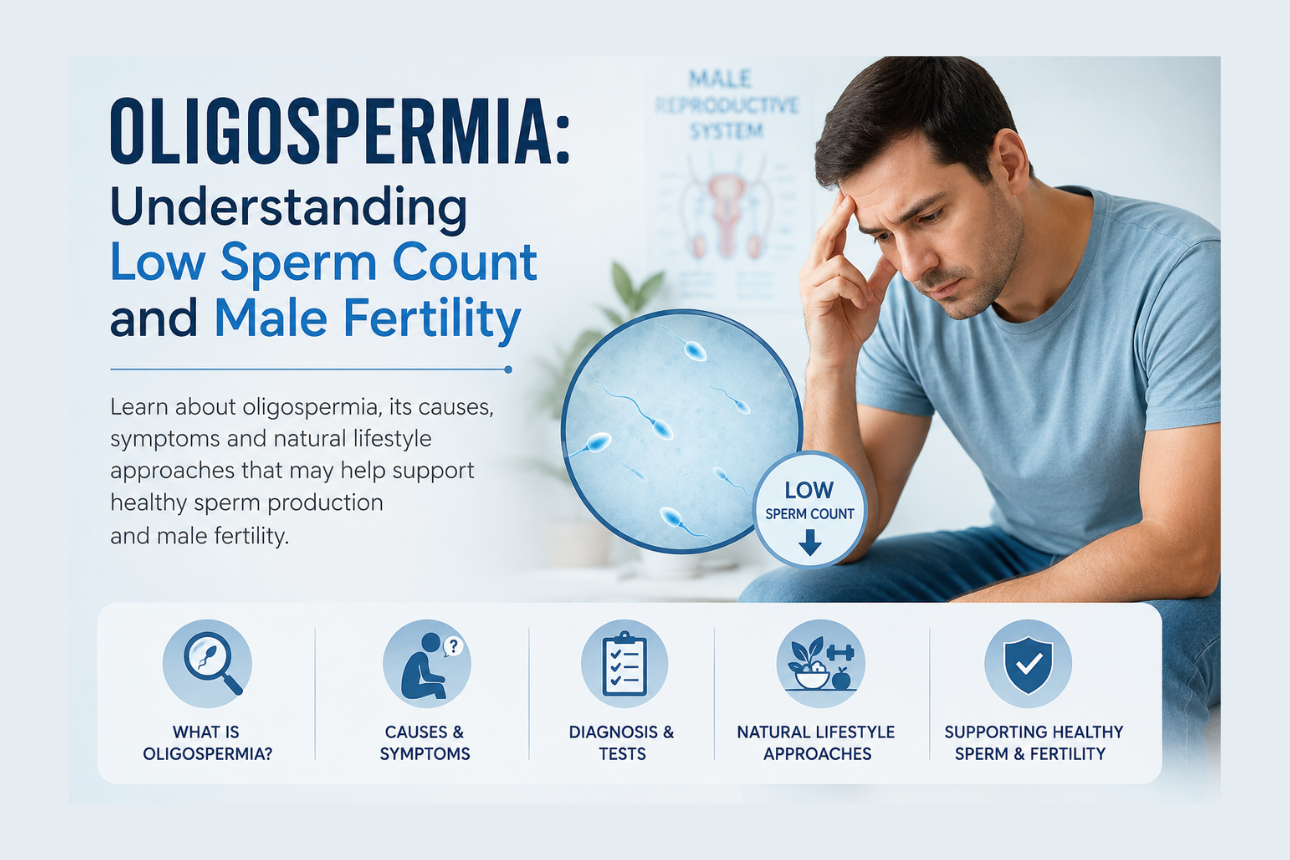
Oligospermia: Understanding Low Sperm Count and Male Fertility
Male fertility depends on several factors, including sperm count, sperm motility and sperm morphology. One of the most common fertility-related concerns among men is oligospermia, a condition characterized by a lower-than-normal sperm count.
Understanding oligospermia, its causes and ways to support reproductive wellness can help men make informed decisions about their health.
What Is Oligospermia?
Oligospermia is the medical term used for low sperm count.
Sperm count refers to the number of sperm present in semen. A lower sperm count may reduce the chances of natural conception because fewer sperm are available to reach and fertilize an egg.
However, sperm count is only one factor in male fertility. Sperm movement and sperm shape also play important roles.
Common Causes of Oligospermia
Several factors may contribute to reduced sperm production.
1. Hormonal Imbalance
Hormones play a key role in regulating sperm production and reproductive function.
2. Chronic Stress
Long-term stress may influence overall health, energy levels and hormonal wellness.
3. Poor Dietary Habits
A lack of essential nutrients may affect general health and reproductive wellness.
4. Smoking and Tobacco Use
Smoking may negatively impact overall reproductive health.
5. Excessive Alcohol Consumption
Heavy alcohol use may influence hormonal balance and vitality.
6. Lack of Physical Activity
A sedentary lifestyle may contribute to reduced overall wellness.
7. Environmental Factors
Exposure to excessive heat and environmental pollutants may affect sperm production.
Possible Symptoms of Oligospermia
Many men with low sperm count may not experience noticeable symptoms.
Possible signs may include:
- Difficulty conceiving
- Reduced libido
- Low energy levels
- Hormonal imbalance-related symptoms
A semen analysis is the most reliable way to evaluate sperm count.
Can Lifestyle Affect Sperm Count?
Yes. Lifestyle habits can influence overall reproductive wellness.
Healthy habits may help support:
- Hormonal balance
- Energy levels
- General health
- Reproductive wellness
Natural Ways to Support Male Reproductive Health
Eat a Nutrient-Rich Diet
Focus on:
- Fresh fruits
- Green vegetables
- Nuts and seeds
- Whole grains
- Protein-rich foods
Stay Active
Regular exercise may support:
- Healthy body weight
- Cardiovascular health
- Energy and stamina
Manage Stress
Helpful practices include:
- Meditation
- Yoga
- Walking
- Deep breathing exercises
Sleep Well
Aim for 7–8 hours of quality sleep every night.
Stay Hydrated
Adequate hydration supports overall body function and wellness.
Traditional Ayurvedic Herbs Used for Male Wellness
Ayurveda has traditionally used several herbs to support vitality and reproductive health.
Ashwagandha
Traditionally used to support strength, stamina and overall wellness.
Shilajit
Widely valued in Ayurveda as a rejuvenating ingredient.
Safed Musli
Traditionally used to support vitality and male wellness.
Gokshura
Often included in Ayurvedic formulations for men’s health.
Vidari
A traditional herb used in various Ayurvedic wellness practices.
Ayurvedic Support for Male Wellness
AYUBIOSCIENCE Retason contains traditional Ayurvedic ingredients including Musli, Ashwagandha, Shilajit, Shatavari, Guduchi, Gokshura, Vidari and other carefully selected herbs traditionally used to support vitality, stamina and male reproductive wellness.
Healthy Daily Habits for Men
To support long-term reproductive wellness:
- Maintain a healthy weight
- Exercise regularly
- Sleep adequately
- Manage stress
- Avoid smoking
- Limit alcohol consumption
- Follow a balanced diet
- Stay hydrated
Consistency is important for overall health and vitality.
Conclusion
Oligospermia, or low sperm count, is a common male fertility concern. Understanding its possible causes and adopting healthy lifestyle habits can help support overall reproductive wellness.
Balanced nutrition, regular exercise, stress management and traditional Ayurvedic wellness practices may contribute to better overall health and vitality.
Add comment